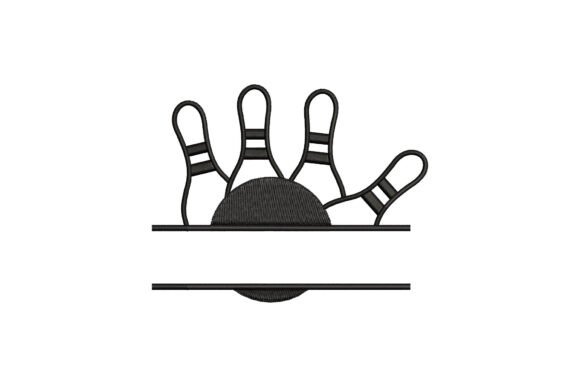
Bowling Split Monogram: A Designer’s Merch Review
As an embroidery designer who specializes in commercial branding and small business merchandise, I approach every new machine embroidery design with a critical eye. It is not enough for a file to simply look attractive on a screen; it must perform under the needle, withstand industrial laundering, and effectively communicate a brand's identity. When evaluating the Bowling Split Monogram for potential use in branded merchandise, my primary focus is on versatility, stitch integrity, and marketability. While the product description suggests this design adds a "subtle touch of charm and creativity" to T-shirts, towels, and pillows, my review examines its viability for professional applications like staff uniforms, custom patches, and retail goods.
Visual Personality and Brand Alignment
The first impression of the Bowling Split Monogram is distinctly retro yet clean. The split layout offers a unique architectural structure that differs from standard block or script monograms. For small business owners, this visual distinction is valuable. In the crowded space of Etsy sellers and local boutiques, generic fonts fail to capture attention. This design strikes a balance between playful nostalgia and structured professionalism. It feels handmade without appearing amateurish, which is crucial for businesses selling artisanal goods, baked items, or pet accessories.
For a creative studio or florist, this aesthetic communicates warmth and approachability. However, for more corporate environments, the geometric nature of the split design allows it to be adapted into a sharper, more modern logo accent by adjusting thread colors. The design does not scream "sportswear" despite the bowling reference; instead, it reads as a stylized typographic element suitable for diverse industries. This adaptability makes it a strong candidate for shops looking to expand their design assets library without purchasing niche-specific files for every single client.
Performance in Commercial Embroidery Applications
When integrating the Bowling Split Monogram into small business merch, performance is paramount. I have evaluated this design across several key commercial categories:
- Apron Embroidery: For cafés and bakeries, aprons are high-wear items. The open nature of a split monogram typically reduces overall stitch density, preventing the heavy, bulletproof feel that can make staff uncomfortable during long shifts. This design sits flat against canvas or denim twill, maintaining legibility even after repeated industrial wash cycles.
- Tote Bag Design: Canvas totes are popular retail add-ons. The Bowling Split Monogram scales well to the larger surface area of a tote bag without losing definition. Its charming aesthetic pairs perfectly with natural cotton canvas, enhancing the perceived value of the handmade product.
- Custom Apparel and Uniforms: On polo shirts or work tees, this design serves as an excellent left-chest logo. The split format allows for longer names or business initials to remain readable at smaller sizes compared to stacked monograms. This is essential for maintaining brand identity on staff clothing where clarity equals professionalism.
- Embroidered Patch Production: Creating patches requires specific digitizing considerations. Because this design features distinct separation in the lettering, it lends itself well to merrowed edge finishing. However, users must ensure the internal spacing is sufficient to prevent the patch fabric from puckering between the split elements during the satin stitch border phase.
Critical Considerations for Production
Despite its versatility, the Bowling Split Monogram requires careful handling in specific scenarios. As with any digital embroidery file, assumptions can lead to production failures. Business owners and decorators must pay attention to the following limitations:
Cap Embroidery Challenges
While this design works beautifully on flat garments, cap embroidery presents unique challenges. The horizontal spread of a split monogram can sometimes exceed the usable sewing field of a standard cap frame, especially on low-profile hats. Furthermore, the curvature of the cap can distort the alignment of the split letters. I strongly recommend testing this design on a curved surface before committing to a bulk order of branded headwear. You may need to resize or slightly adjust the spacing to compensate for the cylinder effect.
Fabric Texture and Stabilizer Selection
The "subtle charm" mentioned in the description relies on clean registration. If you are stitching on textured fabrics like terry cloth towels or pique knits, the fine details of the split monogram can get lost. Proper stabilizer choice is non-negotiable here. Use a cut-away stabilizer for stretchy apparel to prevent distortion over time, and consider a water-soluble topping for high-pile fabrics to keep the stitches crisp. Without these precautions, the professional finish required for customer trust will be compromised.
Small Scale Legibility
There is a temptation to shrink monograms for sleeve cuffs or pocket accents. However, reducing the Bowling Split Monogram below its recommended minimum size risks thread breaks and illegible lettering. Always verify the minimum size specifications within your embroidery file software. If the design includes intricate connecting stitches between the split elements, scaling down too aggressively can cause those connectors to become dense knots rather than smooth transitions.
Impact on Business Value and Customer Trust
In the world of commercial embroidery, the quality of your stitching directly reflects the quality of your business. A poorly executed monogram suggests a lack of attention to detail. Conversely, the Bowling Split Monogram, when stitched correctly, elevates the perceived value of the item. For Etsy sellers, using a distinctive, well-digitized font helps differentiate products from competitors using stock library basics. It signals to the buyer that the seller has curated their design assets thoughtfully.
Consistency is another factor. Using this specific monogram style across multiple product lines—from packaging accents to staff wear—creates visual cohesion. This repetition builds recognition. When a customer sees the same charming, split-letter aesthetic on a thank-you card tag and a barista’s apron, it reinforces the brand narrative. This level of intentional branding fosters trust and encourages repeat business.
Professional Designer Notes for Implementation
Before running the Bowling Split Monogram on a final finished product, adhere to this professional checklist to ensure success:
- Verify Licensing: Before selling any merchandise featuring this design, confirm the commercial licensing terms. Ensure you have the right to use the file for profit-generating activities, not just personal hobbies.
- Create a Printable Mockup: Never assume a client understands how a digital file translates to thread. Create a realistic mockup showing the Bowling Split Monogram on the actual garment type. This manages expectations regarding size, placement, and color interaction.
- Test Thread Colors: Contrast is key. Test the design in both light-on-dark and dark-on-light configurations. Some split designs rely on negative space that disappears if the thread color matches the fabric too closely.
- Check Hoop Size Compatibility: Ensure the design fits comfortably within your machine’s hoop size with adequate clearance for the presser foot. Crowding the hoop leads to registration errors.
- Run a Sew-Out Sample: Always stitch a test on the exact fabric you intend to use for production. Inspect the spacing between the split elements and the stability of the outline stitches. Adjust tension or stabilizer weight based on this physical sample, not the screen view.
The Bowling Split Monogram is a robust asset for small business merchandise when treated with professional respect. By understanding its structural nuances and respecting the technical requirements of custom apparel decoration, embroiderers can transform this charming design into a powerful tool for brand building and product enhancement.